
Avinu Malkeinu
Our Father, our King, be gracious to us and answer us, for we have no deeds to plead
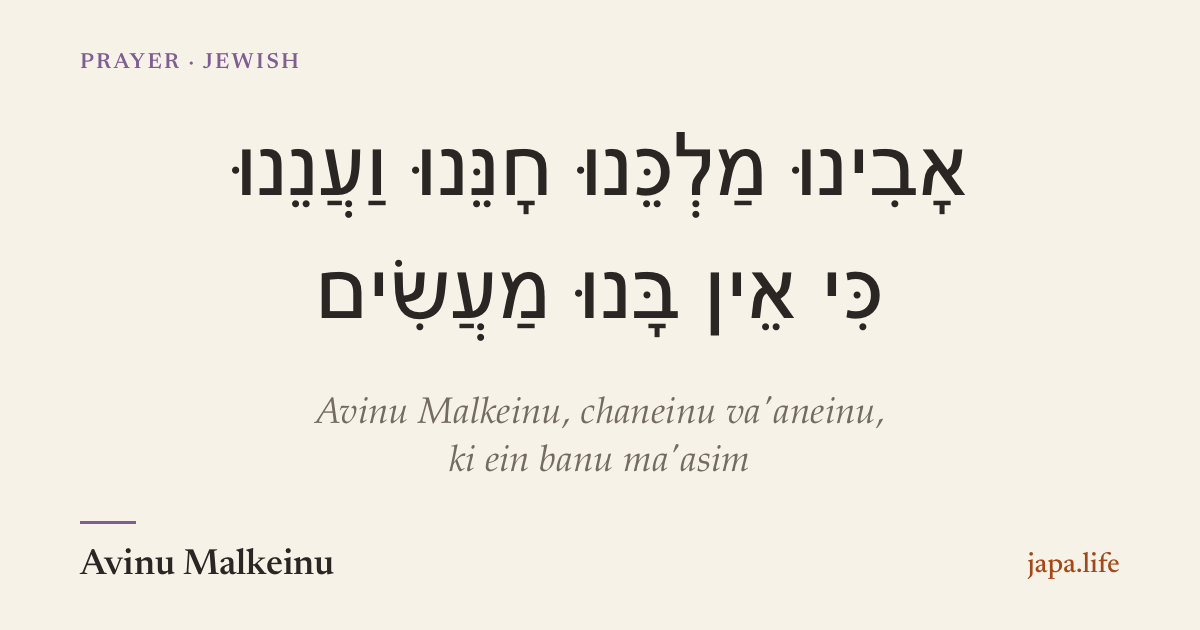
אָבִינוּ מַלְכֵּנוּ חָנֵּנוּ וַעֲנֵנוּ כִּי אֵין בָּנוּ מַעֲשִׂים
Avinu Malkeinu, chaneinu va'aneinu, ki ein banu ma'asim
An excerpt from a closing petition of Avinu Malkeinu, the litany recited during the Days of Awe in many communities. The displayed text omits the petition’s continuation and is not the complete litany.
Source: Siddur, Avinu Malkeinu
The count shown here is Japa's suggestion, not a rule of the tradition. Follow the form and number you were taught.
Not counted on beads
How many times
Japa suggests three times a day. Follow the number you were taught.
Japa counts this one without a mala: a plain daily number rather than a ring of beads, with the words kept in view while you say them. Counting is unlimited and free.
Open this practice in JapaOpens a preview of this practice, with an option to add it in Japa 1.6 or later. If you install the app, return here and open the link again.
What the words say
Avinu Malkeinu: our Father, our King. Two names for God held together, one intimate and one sovereign, and the prayer's force comes from refusing to choose between them. Chaneinu va'aneinu: be gracious to us and answer us. Ki ein banu ma'asim, for we have no deeds: the petition rests on nothing the petitioner has done, which is why it closes the litany rather than opening it.
Where it comes from
The prayer is traditionally traced to Rabbi Akiva in the Talmud (Ta'anit 25b), and grew over centuries into the long litany now recited on fast days and through the Ten Days of Repentance. The number of lines differs between Ashkenazi and Sephardi rites.
How it is practised
Said in the synagogue during the Days of Awe, and famously not on Shabbat in most communities: which is why this observance's programme leaves days out. Customs for which days it is omitted vary; follow your community.
References
- Talmud Bavli, Ta'anit 25b
- Siddur, Avinu Malkeinu; line counts differ between rites
Keep it, and count it every day.
Japa keeps this text beside a large, calm counter on iPhone, iPad and Apple Watch, with a haptic for every bead and an optional bell at the end of each round. Counting is unlimited and free.
In Japa this practice is kept with The Ten Days of Repentance. Adding the observance brings it to Today for as long as it runs, and withdraws it when it ends. Browsing every observance is free; adding one to Today is part of Japa Lifetime.
Get Japa on the App Store